Coming Back From a Wrist Injury: How to Return to Training Without Re-Injuring It
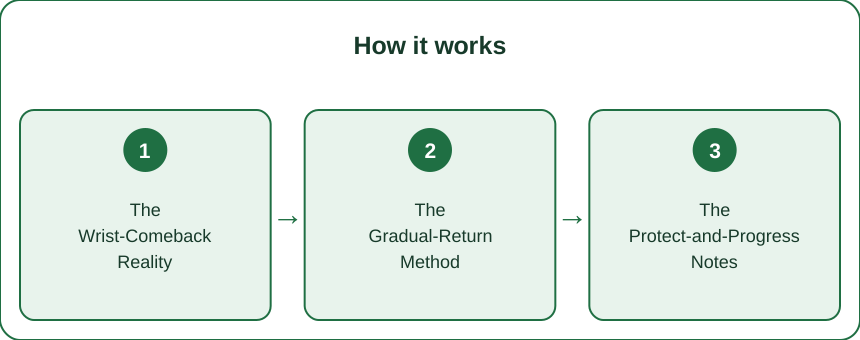
The wrist is involved in almost everything — pushing, pulling, planking, lifting — so a wrist injury sidelines more than you’d expect, and coming back too fast re-injures it. A patient, structured return protects it. The comeback guide: the wrist-comeback reality, the gradual return and the protect-and-progress notes. (Not medical advice; follow your provider.)

The Wrist-Comeback Reality
Understanding the wrist comeback: the the-wrist-is-everywhere (the wrist involved in most upper-body training from the returning-to-exercise-after-injury chapter — the the-involvement; the wrist-in-everything), the coming-back-too-fast-re-injures (the rushing the return re-injuring it from the returning-to-exercise-after-injury chapter — the the-re-injury; the don’t-rush), the the-provider-clearance-first (the provider-clearance before returning from the returning-to-exercise-after-injury chapter — the the-clearance; the medical-first), the the-gradual-structured-return (the a-patient, structured return protecting it from the returning-to-exercise-after-injury chapter — the the-gradual; the structured-return), and the reframe (the wrist-comeback as a cleared, gradual, structured return protecting a re-injury-prone joint).

The Gradual-Return Method
Returning to training gradually: the the-clearance-and-rehab (the provider-clearance and rehab-first from the returning-to-exercise-after-injury chapter — the the-clearance; the rehab-first), the the-wrist-mobility-and-strength (the gentle wrist-mobility and strengthening from the returning-to-exercise-after-injury chapter — the the-wrist-work; the mobilize-and-strengthen), the the-start-with-wrist-friendly-movements (the wrist-friendly exercises first (avoid loaded-extension) from the knee-friendly-cardio-menu chapter’s modification-logic — the the-friendly-moves; the modify-first), the the-avoid-loading-too-soon (the not-loading the wrist too-soon from the returning-to-exercise-after-injury chapter — the the-caution; the don’t-load-early), the the-modify-pushing-movements (the modifying push-ups and planks (fists, handles) from the returning-to-exercise-after-injury chapter — the the-modifications; the modify-pushing), the the-gradual-loading (the gradually re-loading the wrist from the returning-to-exercise-after-injury chapter — the the-gradual; the progressive-loading), the the-pain-free-progression (the progressing pain-free from the returning-to-exercise-after-injury chapter — the the-pain-free; the no-pain), and the the-support-if-advised (the wrist-support/wraps if advised — the the-support; the if-recommended).
The Protect-and-Progress Notes
Protecting the wrist and progressing: the the-heed-pain (the stopping-at pain (not pushing-through) from the returning-to-exercise-after-injury chapter — the the-pain; the heed-it), the the-wrist-strengthening (the ongoing wrist-and-forearm strengthening from the returning-to-exercise-after-injury chapter — the the-strength; the strengthen-it), the the-mobility-and-prehab (the wrist-mobility and prehab from the returning-to-exercise-after-injury chapter — the the-prehab; the mobilize), the the-modify-when-needed (the modifying movements to protect it from the returning-to-exercise-after-injury chapter — the the-modifications; the modify), the the-gradual-progression (the gradually progressing load from the returning-to-exercise-after-injury chapter — the the-progression; the progress-slowly), the the-comeback-mental-game (the the-patience and comeback-mindset from the comeback-mental-game chapter — the the-mental; the be-patient), the the-provider-and-physio (the provider/physio guidance from the returning-to-exercise-after-injury chapter — the the-professional; the get-guidance), and the frame (wrist-comeback as cleared-rehab, wrist-friendly-modified, gradually-loaded pain-free return with strengthening — return without re-injuring it. Come back from a wrist injury with a structured, cleared return — rehab and wrist mobility-and-strength first, wrist-friendly modified movements (fists, handles for pushing), gradual pain-free loading, and ongoing strengthening — heeding pain, being patient, and following your provider: return to training without re-injuring it.
The wrist is involved in almost everything — pushing, pulling, planking, lifting — so a wrist injury sidelines more than you’d expect, and coming back too fast re-injures it (follow your provider). Return gradually: get clearance and do rehab first, gentle wrist mobility-and-strengthening, wrist-friendly movements before loaded extension, modified pushing (fists, handles for push-ups and planks), and gradual pain-free re-loading. Protect and progress — heed pain (don’t push through), keep strengthening the wrist-and-forearm, do mobility-and-prehab, modify when needed, progress gradually, and stay patient with your provider’s guidance. Return without re-injuring it.
Keep Reading
This article is for general informational purposes only and is not medical advice. Always consult a qualified health professional for guidance specific to you.