Why a Fully Healed Injury Still Feels Weaker Than the Other Side for Months Afterward
A doctor or physical therapist clearing an injury as fully healed doesn’t mean the surrounding muscle has caught back up to its pre-injury strength, and that lingering weakness gap can persist for months after the tissue itself is genuinely healed. Here is the specific reason strength lags behind healing and how to close that remaining gap deliberately. This is general information, not medical advice.

The Specific Reason Strength Lags Behind Actual Tissue Healing
Why the two processes run on different timelines: the muscle-strength-around-an-injured-area-declines-rapidly-during-any-immobilization-or-reduced-use-period-and-doesnt-automatically-rebuild-once-tissue-healing-completes (the muscle strength surrounding an injured joint or area declining measurably fast during any period of immobilization, protective guarding, or simply reduced use during recovery, and that lost strength not automatically rebuilding itself the moment tissue healing is medically confirmed complete, per the returning-to-exercise-after-injury-guide logic — the muscle-strength-surrounding-an-injured-area-declining-measurably-fast-during-any-period-of-reduced-use-and-not-automatically-rebuilding-itself-the-moment-tissue-healing-is-confirmed-complete), the the-neuromuscular-activation-patterns-and-the-brains-confidence-in-fully-loading-the-area-also-lag-behind-tissue-healing-independent-of-pure-muscle-strength (the neural activation pattern and a kind of subconscious protective hesitation around fully loading the previously injured area also lagging behind pure tissue healing, an additional factor distinct from muscle mass itself, per the the-psychology-of-trusting-an-injured-part-again-guide logic — the neural-activation-pattern-and-a-subconscious-protective-hesitation-around-fully-loading-the-area-also-lagging-behind-pure-tissue-healing-as-an-additional-factor-distinct-from-muscle-mass-itself), and the reframe (the lingering weakness as the predictable, explainable result of two separate lagging processes — actual muscle strength decline during reduced use, and neuromuscular confidence and activation pattern recovery — both running on their own slower timeline independent of when tissue healing itself gets medically confirmed).

Why This Gap Gets Missed Even by Otherwise Diligent Rehab Patients
The blind spot: the formal-physical-therapy-programs-often-end-once-basic-functional-milestones-are-met-before-strength-has-fully-matched-the-uninjured-side (the formal physical therapy or structured rehab often concluding once basic functional milestones are reached, sometimes before strength has actually fully matched the uninjured side, leaving a real gap between the end of formal rehab and true symmetrical strength, per the returning-to-exercise-after-injury-guide logic — the formal-physical-therapy-often-concluding-once-basic-functional-milestones-are-reached-sometimes-before-strength-has-actually-fully-matched-the-uninjured-side-leaving-a-real-gap-between-the-end-of-formal-rehab-and-true-symmetrical-strength), and the frame (the blind spot as the natural end point of structured rehab not always coinciding with the point of actual full strength symmetry — a reason to treat the transition out of formal rehab as a handoff to self-directed continued rebuilding rather than a finish line).
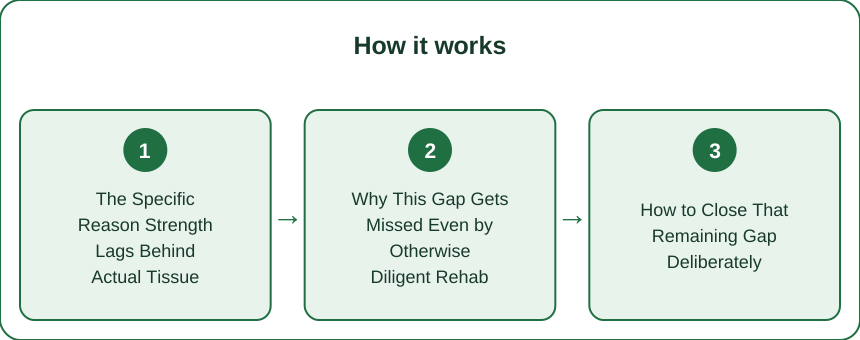
How to Close That Remaining Gap Deliberately
The practical rebuilding approach: the treat-medical-clearance-as-the-start-of-a-dedicated-strength-rebuilding-phase-not-the-end-of-the-recovery-process (the treating the point of medical clearance as specifically marking the beginning of a deliberate strength-rebuilding phase, rather than assuming recovery is essentially finished once tissue healing is confirmed, per the avoiding-reinjury-on-your-comeback-guide logic — the treating-the-point-of-medical-clearance-as-specifically-marking-the-beginning-of-a-deliberate-strength-rebuilding-phase-rather-than-assuming-recovery-is-essentially-finished), the the-directly-compare-and-track-strength-between-the-previously-injured-and-uninjured-side-to-set-a-concrete-rebuilding-target (the using the uninjured side’s strength as a concrete, measurable comparison target for the rebuilding side, giving the rebuilding phase a clear objective endpoint rather than a vague sense of feeling recovered, per the comeback-mental-game-guide logic — the using-the-uninjured-sides-strength-as-a-concrete-measurable-comparison-target-gives-the-rebuilding-phase-a-clear-objective-endpoint-rather-than-a-vague-sense-of-feeling-recovered), the the-include-deliberate-confidence-and-loading-progression-work-not-just-pure-strength-exercises-to-address-the-neuromuscular-lag-specifically (the incorporating deliberate, progressive full-loading practice alongside pure strength work, specifically addressing the neuromuscular confidence lag rather than assuming strength training alone automatically resolves it, per the shoulder-injury-comeback-guide logic — the incorporating-deliberate-progressive-full-loading-practice-alongside-pure-strength-work-specifically-addresses-the-neuromuscular-confidence-lag-rather-than-assuming-strength-training-alone-automatically-resolves-it), and the frame (the deliberate rebuilding approach as treating medical clearance as the start of a dedicated strength phase rather than the finish line, directly comparing and tracking strength against the uninjured side for a concrete target, and including deliberate loading-confidence progression alongside pure strength work — closing both the measurable strength gap and the less visible neuromuscular confidence gap. This is general information, not medical advice.)
A fully healed injury can still feel measurably weaker than the uninjured side for months because muscle strength around an injured area declines rapidly during any period of immobilization or reduced use, and that lost strength doesn’t automatically rebuild itself the moment tissue healing is medically confirmed complete — and separately, neuromuscular activation patterns and a kind of subconscious protective hesitation around fully loading the area also lag behind pure tissue healing, an additional factor distinct from muscle mass itself. Closing that gap deliberately means treating the point of medical clearance as specifically marking the beginning of a dedicated strength-rebuilding phase rather than assuming recovery is essentially finished, directly comparing and tracking strength against the uninjured side to give the rebuilding phase a concrete, measurable target, and incorporating deliberate progressive full-loading practice alongside pure strength work to specifically address the neuromuscular confidence lag rather than assuming strength training alone resolves it. This is general information, not medical advice.
Keep Reading
This article is for general informational purposes only and is not medical advice. Always consult a qualified health professional for guidance specific to you.