Look 1: Why Keeping a Training Log Matters Most During Your Comeback
Quick Answer: A simple comeback log — load, reps, and how the injured area felt on a 1-10 scale — catches setbacks 1-2 sessions earlier than memory alone, because injured-area symptoms are notoriously easy to misremember or minimize in the moment.
Most people track their training obsessively until they get hurt, then track nothing during the exact period where data would help most.

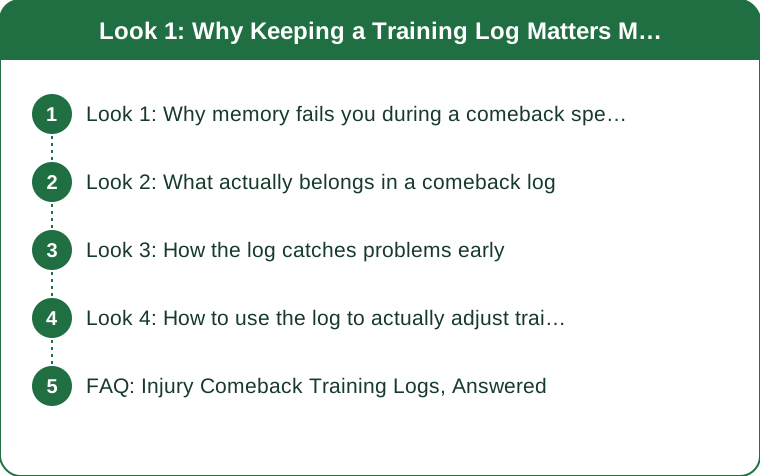
Look 1: Why memory fails you during a comeback specifically
Post-injury, you’re managing pain, fear, and hope simultaneously — a combination that reliably distorts memory. People consistently underreport how a joint felt on a hard day and overreport progress on a good one, which is exactly backwards from what a comeback needs.
Look 2: What actually belongs in a comeback log
Keep it to 3 numbers per session: load used, reps completed, and injured-area feeling (1-10) both during and 24 hours after. That third number is the one most people skip and the one that actually predicts whether you’re progressing safely.

Look 3: How the log catches problems early
A pattern of rising 24-hour-after scores over 2-3 sessions, even with the same training load, is the earliest reliable sign you’re progressing too fast — often visible in the numbers a full week before it would show up as a real setback.
Look 4: How to use the log to actually adjust training
If your 24-hour score trends up for 2 straight sessions, hold your current load for one more session before adding anything. If it trends up for 3, drop back to your last comfortable load. This simple rule prevents most of the classic comeback-log spirals.
FAQ: Injury Comeback Training Logs, Answered
Do I need a fancy app for this?
No — a notes app or a small notebook with three numbers per session is genuinely enough; complexity just makes people quit tracking.
How long should I keep logging after I feel fully recovered?
Most people can taper off 4-6 weeks after returning to full training load without setbacks, once the pattern stays consistently low.
What if my numbers look fine but something still feels off?
Trust the feeling over the numbers — logs catch trends, not everything, and persistent ‘off’ feelings are worth a professional check regardless of what the log shows.
TL;DR:
- Memory reliably distorts how an injured area actually felt during training
- Track just 3 numbers: load, reps, and injured-area feeling 24 hours later
- Rising 24-hour scores over 2-3 sessions is the earliest sign you’re progressing too fast
- Use the trend to adjust load before a real setback happens, not after
This is general information, not medical advice — persistent symptoms deserve a professional opinion regardless of what your log shows.
Keep Reading
This article is for general informational purposes only and is not medical advice. Always consult a qualified health professional for guidance specific to you.