The Shoulder Comeback: Returning to Training After Rotator Cuff and Impingement Trouble
The shoulder is the body’s most mobile joint and it pays for that resume with the most nuanced comeback — the rotator-cuff strain or impingement that healed still needs its stability rebuilt before the pressing returns. The shoulder-comeback guide. (The physio designs YOUR plan; this is the literacy.)

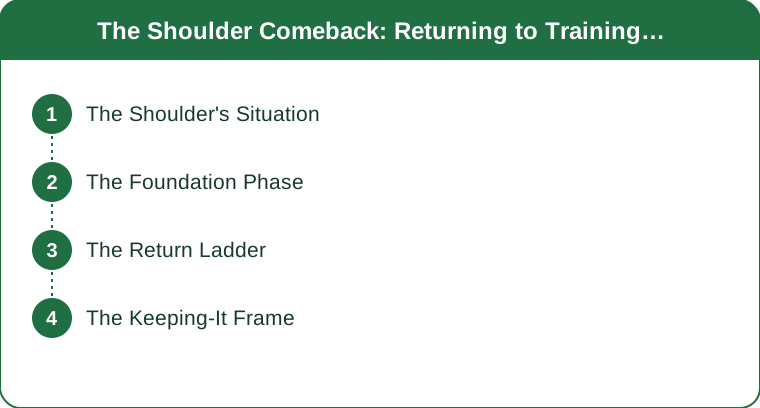
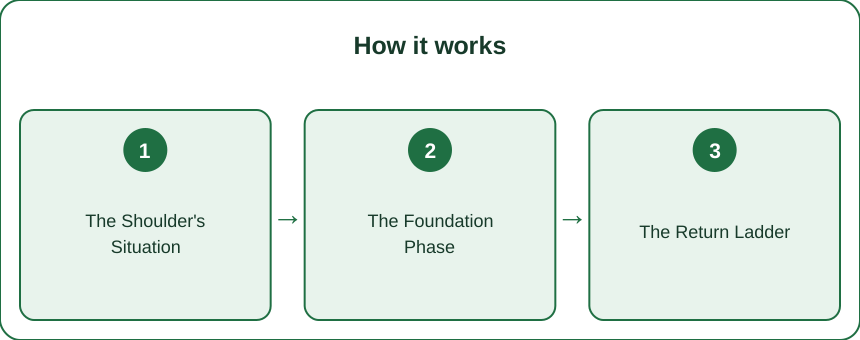
The Shoulder’s Situation
Why this joint needs special care: the mobility-stability trade (the shoulder’s huge range purchased with minimal bony stability — the rotator cuff as the active stabilizer doing constant work), the common injury patterns (the impingement from overhead volume plus poor mechanics, the cuff strains from loads the stabilizers weren’t ready for — the desk posture’s rounded shoulders as the frequent accomplice per the posture chapters), the rest-alone myth (the shoulder that just rests returns weak to the same job — the rehab that rebuilds the stabilizers being non-optional), and the professional gate (the persistent shoulder pain diagnosed before self-rehabbed — the physio-or-doctor visit from the pain-signals doctrine; everything below assumes cleared-and-guided status).
The Foundation Phase
The stability rebuild: the pain-free-range rule (every exercise inside the range that doesn’t hurt — the pain-free window that expands weekly; the pushing-through-pinch habit that made the injury now retired), the cuff activation tier (the band external rotations, the side-lying rotations — the small movements that feel like nothing and ARE the rehab; the boring-but-critical weeks), the scapular re-education (the shoulder-blade control work — the wall slides, the scap push-ups, the rows with squeeze; the platform the cuff works from, per the back-training chapter’s pull emphasis), the posture homework (the desk setup and the chest-stretching from the ergonomic chapters — the environment that keeps re-creating impingement getting fixed alongside), and the patience math (the foundation phase runs weeks, not days — the stabilizers strengthen on muscle’s timeline; the rushing that restarts the cycle).

The Return Ladder
Loading back up: the horizontal-before-vertical sequence (the push-up progressions and floor presses before overhead anything — the pressing returned in the plane the shoulder tolerates first), the row-heavy ratio (the pull volume at twice the push during the comeback — the balance doctrine at rehab intensity), the overhead re-entry (the landmine press as the on-ramp — the angled pressing that’s kinder than strict vertical; then light dumbbell pressing with full control before barbells), the load rules (every rung at boring-easy before advancing — the two-pain-free-weeks-per-step rhythm; the single-rep-max ambitions parked for a season), and the sport-specific finale (the swimmer’s strokes, the yogi’s chaturangas, the climber’s hangs re-entered as the last rung — the specific demand rehearsed after the general capacity returns).
The Keeping-It Frame
Never again (probably): the maintenance minimum (the cuff-and-scap work kept at once-weekly forever — the fire-insurance premium; the warm-up slot from the warm-up chapter as its natural home), the volume-management wisdom (the overhead volume ramped gradually always — the swim-yoga-press weeks that stack overhead work getting audited; the impingement that returns usually announced by volume spikes), the early-signal literacy (the pinch that whispers gets a deload week — the whisper answered beats the shout; the pain-signals chapter’s hierarchy on permanent duty), and the comeback identity (the shoulder-comeback graduate presses smarter than the never-injured — the mechanics, the balance and the signal-literacy as the injury’s tuition paid out; the mental-game chapter’s meaning-making applied). Stabilize first, press horizontal then up, keep the premium paid: the shoulder, returned.
Rebuild the cuff and scapula before pressing, horizontal before overhead, rows at twice the pushes. The shoulder comeback is a stability project — and the maintenance premium keeps it a one-time one.
Keep Reading
This article is for general informational purposes only and is not medical advice. Always consult a qualified health professional for guidance specific to you.