The Comeback Protocol: How to Return to Exercise After Injury (Without Round Two)
Every injured exerciser faces the same fork in the road twice: first, the temptation to come back too soon — and later, the fear of coming back at all. Both paths lose. The comeback done right is a skill with actual rules: graded loading, honest pain scales, and patience measured in weeks rather than vibes. Written with care (and not as a substitute for your clinician’s advice), here is the protocol for returning stronger — not just returning.

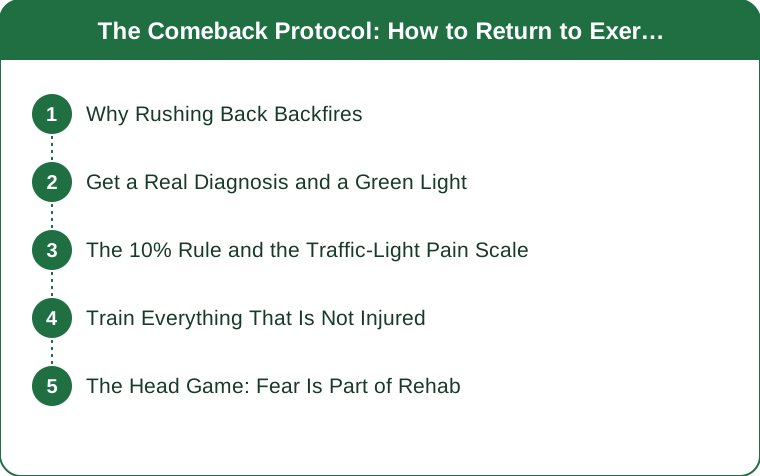
Why Rushing Back Backfires
Healing tissue regains capacity on a schedule stubbornly indifferent to your race calendar: it tolerates gentle load early — load actually guides healing — but not the full forces of your old routine. Re-injury most often happens in the confident window: pain has faded, tissue strength has not caught up, and one enthusiastic session asks for 100% from a structure at 60%. The rule that prevents it: pain leaving is the halfway flag, not the finish line. Capacity, not comfort, decides your timeline.
Get a Real Diagnosis and a Green Light
Everything sensible starts with knowing what you are rehabbing: a physical therapist or sports-medicine visit turns weeks of guessing into a plan, and most injuries earn specific exercises that outperform pure rest — modern rehab is active, not couch-shaped. Ask your clinician three questions: What can I safely do right now? What signals mean stop? What milestones unlock the next level? Then actually do the boring rehab exercises. They are the toll road back, and skipping tolls gets expensive.

The 10% Rule and the Traffic-Light Pain Scale
Two tools run the entire comeback. Progression: increase only one variable — load, distance, or intensity — by roughly 10% per week, never two at once. Monitoring: the traffic-light scale — pain 0–2 out of 10 during or after is green, proceed; 3–5 that settles within 24 hours is yellow, hold this level another week; anything sharper, swelling, or pain that lingers past a day is red, step back a level and reassess. Boring? Completely. Also the difference between a six-week comeback and a six-month saga.
Train Everything That Is Not Injured
A sidelined ankle is not a sidelined body: upper-body strength, core work, and approved cardio (pool running is the comeback queen — zero impact, full effort) maintain fitness, mood and identity while the injury heals. Research even shows training one limb preserves some strength in its resting twin — the nervous system shares notes. Athletes call it training around the injury, and it is half psychological: you remain someone who trains, which makes the eventual full return a step, not a leap.
The Head Game: Fear Is Part of Rehab
The last mile of every comeback is mental: hesitation on the movement that hurt you, bracing, holding back — and paradoxically, moving timidly can itself invite trouble. Treat confidence like tissue: load it gradually. Rehearse the feared movement at low intensity until boring, then progress; keep a log so nervous days can read the receipts of how far you have come; and let the first full session back be deliberately easy — a victory lap, not a test. The comeback is complete when you stop thinking about it mid-movement. That day comes.
Come back the smart way: diagnosis first, boring rehab done fully, 10% weekly steps, green-yellow-red honesty, everything else trained meanwhile, and fear given the same graded loading as tissue. Do this and the comeback becomes something almost nobody expects: an upgrade — better form, stronger supporting muscles, and a body you understand far more deeply than before the injury. This article is general information; your clinician holds the final word. Now go do your rehab exercises. Yes, today.
Keep Reading
This article is for general informational purposes only and is not medical advice. Always consult a qualified health professional for guidance specific to you.