The Lower-Back Comeback: Returning to Training After Back Pain Safely
The lower-back comeback is one of the most cautious returns in training — the fear of re-injury is real, and the back rewards patient, progressive loading while punishing the rush. The guide: the back-injury reality, the graded-return progression and the movement-and-prevention habits that get you back stronger. (See a doctor or physio for your specific injury.)

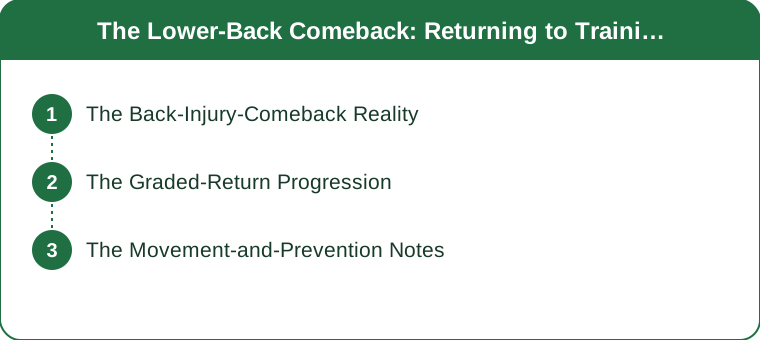
The Back-Injury-Comeback Reality
Understanding the back comeback: the the-common-and-cautious (the back-pain common, its-comeback cautious — the the-common-injury; the the-careful-return; the the-returning-after-injury chapter’s principles), the the-fear-of-re-injury (the re-injury-fear being real, part-of-the-comeback from the comeback-mental-game chapter — the the-fear-is-normal; the the-mental-side), the the-movement-is-usually-good (the movement often-better-than-rest for common-back-pain — the the-motion-is-medicine; the the-not-just-rest), the the-professional-first (the diagnosis-and-guidance from a doctor-or-physio — the the-professional-gate; the the-get-guidance; the the-your-specific-injury), the the-patient-progressive-loading (the back-rewarding patient, progressive-loading — the the-patience; the the-gradual-loading), and the reframe (the lower-back-comeback as a patient, graded, professionally-guided return — the go-slow-go-strong; the the-back-stronger).

The Graded-Return Progression
Returning to training by stages: the the-calm-it-down-phase (the reduce-irritation and gentle-movement first — the the-calm-phase; the the-settle-it; the the-gentle-start), the the-gentle-movement-and-mobility (the pain-free gentle-movement and mobility — the the-mobility; the the-gentle-range), the the-core-and-stability-rebuild (the core-and-stability work as the foundation from the core-and-lower-back logic — the the-core-rebuild; the the-stability-foundation; the the-support-the-back), the the-progressive-loading (the gradually-reintroduce-loading, pain-free — the the-progressive-loading; the the-graded-return), the the-hinge-and-lift-relearning (the relearn hinging-and-lifting with good-form — the the-lift-technique; the the-hip-hinge; the the-safe-loading), the the-pain-free-progression (the every-step pain-free-first — the the-pain-free-rule; the the-dont-push-into-pain), the the-build-back-to-full (the gradually-return-to-full-training — the the-full-return; the the-patient-build), and the the-professional-guided (the physio-guided progression — the the-guided; the the-professional-plan).
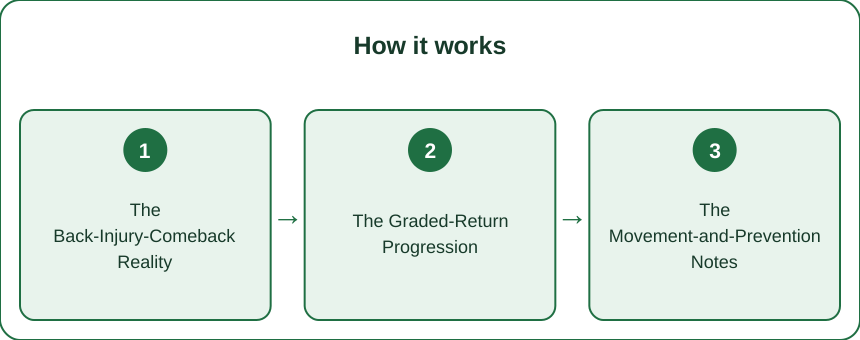
The Movement-and-Prevention Notes
Coming back stronger and staying there: the the-strength-protects (the a-strong-core-and-back protecting-against-recurrence from the core chapters — the the-strength-prevents; the the-strong-back), the the-good-lifting-mechanics (the good-hinge-and-lift-technique always — the the-technique; the the-lift-well; the the-protect-the-back), the the-movement-and-activity (the staying-active as back-protection — the the-move-more; the the-active-back), the the-address-the-cause (the address-what-caused-it (desk-posture, weak-core) from the desk-relief logic — the the-root-cause; the the-fix-the-why), the the-listen-and-not-rush (the heed-signals, dont-rush from the comeback-mental-game chapter — the the-patience; the the-dont-rush), the the-maintenance-work (the ongoing core-and-back work — the the-maintenance; the the-keep-it-up), the the-mental-confidence (the rebuild-confidence from the comeback-mental-game chapter — the the-trust-the-back; the the-confidence), and the frame (the lower-back comeback through the reality, the graded-return and movement-and-prevention — the calm-it-down, rebuild-core, progressively-load and prevent-recurrence approach that returns you stronger; the back, comeback done safely). Calm it down, rebuild core-and-stability, progressively reload pain-free with good mechanics, and address the cause — guided by a physio: the lower-back comeback, done safely and stronger.
The lower-back comeback is one of training’s most cautious returns — re-injury fear is real, and the back rewards patient loading while punishing the rush. Movement is usually better than rest for common back pain, but get a diagnosis first. Progress by stages: calm the irritation with gentle movement, rebuild core-and-stability, then progressively reload pain-free while relearning good hinge-and-lift mechanics. Come back stronger by strengthening the core, fixing the cause (desk posture, weak core), and rebuilding confidence — guided by a physio.
Keep Reading
This article is for general informational purposes only and is not medical advice. Always consult a qualified health professional for guidance specific to you.