The Mental Side of Injury Comeback: Fear, Trust and the Body You're Learning Again
The tissue heals on its schedule but the trust heals on another — the cleared-to-train athlete who still braces, hesitates and protects is running the comeback’s real second half. The mental-game guide: the fear, the ladder and the identity work.

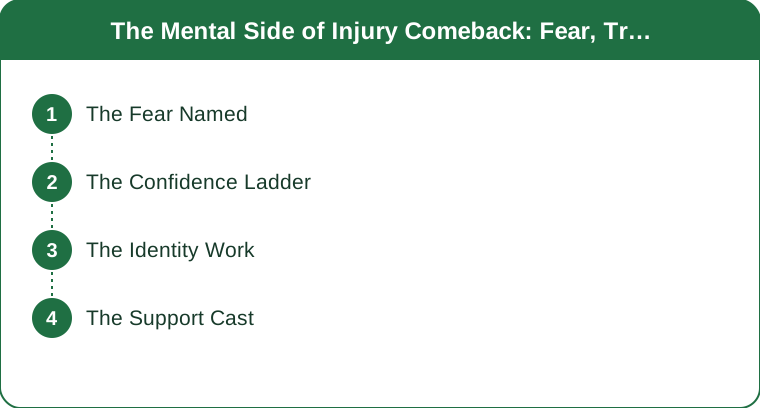
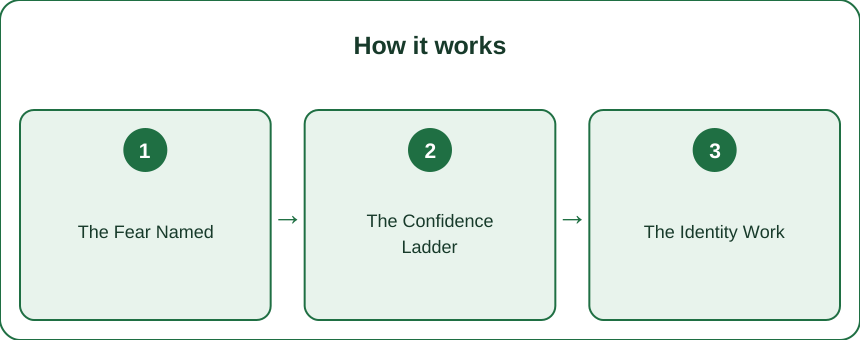
The Fear Named
What re-injury anxiety does: the bracing pattern (the guarded movement that protects the healed part — and loads everything else wrong; the hesitation that ironically raises injury risk), the flashback moments (the movement that resembles the injury mechanism triggering the flinch — the normal nervous-system response, not weakness), the confidence-performance gap (the cleared tissue outperforming the trusting mind — the physio’s ‘you’re ready’ landing on a body that doesn’t believe it), and the legitimacy note (kinesiophobia — the fear of movement — is a studied phenomenon with real protocols; the mental half of rehab being half, not garnish; the sports-psychology tier existing for exactly this).
The Confidence Ladder
Rebuilding trust by rungs: the graded-exposure principle (the feared movement approached in steps — the quarter-depth version, the slow version, the loaded version; each rung held until boring; the anxiety-ladder doctrine applied to the body), the success-stacking design (the comeback program built for WINS — the sessions ending on completed reps, not failures; the confidence account funded deposit by deposit), the movement-specific rehearsal (the injury mechanism’s movement pattern deliberately retrained — the ankle that rolled doing balance work, the knee that twisted doing controlled rotation; the feared thing practiced until familiar), the video-and-mirror evidence (the recorded rep that LOOKS normal arguing against the felt wrongness — the objective feedback that recalibrates), and the setback protocol (the flare-up day read as data, not disaster — the ladder descended a rung, not abandoned; the two-steps-forward pattern being the pattern).

The Identity Work
Who you are while sidelined: the athlete-identity crisis (the runner who can’t run losing more than fitness — the identity, community and coping mechanism all benched at once; the grief being proportionate to the loss), the redefinition move (the identity widened from ‘runner’ to ‘person who trains’ — the injury window’s pool-and-strength work counting as the identity’s continuation; the swap-not-stop doctrine as psychology), the comparison management (the past-self comparison retired hardest here — the pre-injury PRs archived; the comeback measured from the comeback’s start, per the fresh-start doctrine), and the meaning-making note (the athletes who narrate injury as a chapter — the recovery skills, the weak-link discoveries, the patience earned — return psychologically stronger than the ones who narrate it as theft; the story you tell becomes the training partner).
The Support Cast
Not alone on the ladder: the physio partnership (the fear disclosed to the professional — the graded plan built WITH the anxiety in view; the good clinician treats the confidence alongside the tissue), the training-partner role (the comeback sessions accompanied — the body-double security and the witness to progress; the buddy briefed on the encourage-don’t-push assignment), the community examples (the comeback stories sought out — the athletes who returned from the same injury as existence proofs; the online communities where the fear is spoken), the professional-help threshold (the fear that stops life, not just sport — the persistent avoidance and distress deserving the sports-psych or therapy conversation; the mental-health toolkit applying), and the timeline patience (trust heals slower than tissue and that’s the design — the extra weeks of hesitant training being part of rehab, not evidence of failure). Ladder the fear, widen the identity, borrow support: the trust, rebuilt.
Fear of re-injury is rehab’s real second half — ladder the feared movement gradually, stack wins, measure from the comeback’s start. Tissue heals on one clock, trust on another; honor both.
Keep Reading
This article is for general informational purposes only and is not medical advice. Always consult a qualified health professional for guidance specific to you.