How to Avoid Reinjury on Your Comeback: Return Stronger, Not Sooner
Coming back from an injury, the biggest danger is not the original injury — it is reinjuring yourself by rushing back too fast. A smart, patient comeback returns you stronger and more resilient than before. Here is why reinjury is the real risk, the principles of a safe return, and how to listen to your body along the way.

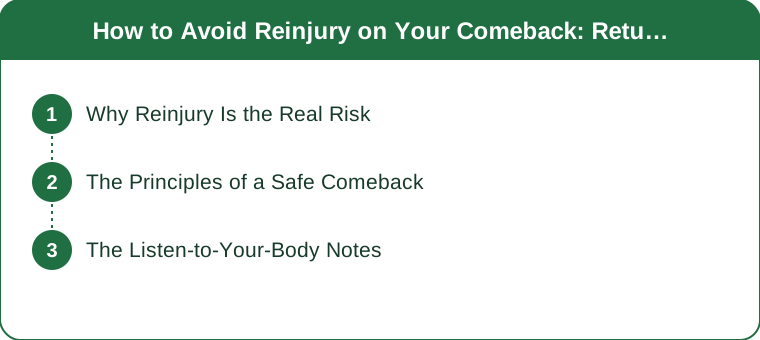
Why Reinjury Is the Real Risk
The comeback danger: the the-rushing-back (the returning too fast, before the area is ready, causing reinjury from the returning logic — the the-impatience-trap), the the-doing-too-much-too-soon (the jumping back to your old level overloading the healing tissue — the ease-back-in), the the-underlying-weakness (the the original weakness or imbalance still present if not addressed — the fix-the-cause), the the-fear-and-compensation (the moving cautiously and compensating, straining other areas from the mental-game logic — the the-compensation-risk), the the-comeback-is-fragile-early (the the healing area being vulnerable early in the return — the handle-with-care), and the reframe (the reinjury as the real comeback risk — avoided by returning patiently and stronger, not sooner).

The Principles of a Safe Comeback
Returning the right way: the the-get-cleared (the following medical or physio guidance on readiness from the returning logic — the cleared-first), the the-start-well-below-your-old-level (the beginning gentle and well below where you left off from the returning logic — the start-low), the the-progress-gradually (the increasing load and intensity slowly, in stages from the returning logic — the small-steps-up), the the-rebuild-the-weakness (the strengthening the injured area and its supporters, and fixing the cause — the strengthen-the-gap; from the comeback logic), the the-mobility-and-form (the restoring mobility and good movement before loading heavily — the move-well-first), the the-both-sides-and-balance (the addressing imbalances so you do not compensate — the balance-it-out), the the-warm-up-thoroughly (the extra warm-up around the returning area from the warmup logic — the prime-it-well), and the the-patience-over-ego (the resisting the urge to rush from the mental-game logic — the patience-wins).
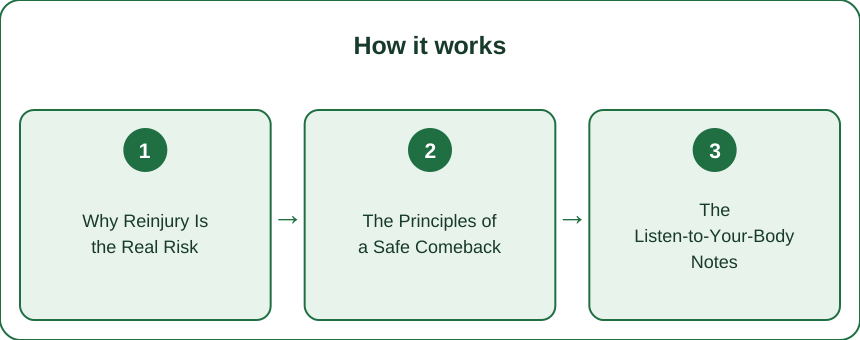
The Listen-to-Your-Body Notes
Reading the signals: the the-distinguish-soreness-from-pain (the normal training soreness versus injury pain from the returning logic — the know-the-difference), the the-back-off-at-warning-signs (the easing off at pain, swelling or setbacks — the the-warning-signs), the the-do-not-push-through-pain (the never training through the injury pain — the pain-is-a-stop-sign), the the-progress-when-ready (the advancing only when the current level feels solid — the earn-the-next-step), the the-recover-well (the sleep, nutrition and rest supporting healing from the recovery logic — the recover-to-return), the the-mental-patience (the managing the frustration of a slow return from the mental-game logic — the the-head-game), the the-consult-when-unsure (the checking with a professional at setbacks — the get-guidance), and the frame (the safe comeback as a cleared, gradual return that rebuilds the weakness and respects pain signals — back stronger, not sooner. Start well below your old level, progress in stages, fix the underlying cause, warm up thoroughly, and back off at any warning sign).
Coming back from an injury, the biggest danger is not the original injury but reinjuring yourself by rushing back. Reinjury is the real risk because returning too fast overloads healing tissue, jumping to your old level is too much too soon, the underlying weakness may still be present, and cautious compensation strains other areas. A safe comeback: get cleared, start well below your old level, progress gradually in stages, rebuild the injured area and fix the cause, restore mobility and form before loading heavily, address imbalances, warm up thoroughly, and choose patience over ego. Listen to your body by distinguishing soreness from pain, backing off at warning signs, never training through injury pain, progressing only when ready, recovering well, managing the mental frustration, and consulting a professional at setbacks. Back stronger, not sooner.
Keep Reading
This article is for general informational purposes only and is not medical advice. Always consult a qualified health professional for guidance specific to you.