5-Step Checklist Before You Return to Running After Injury
Quick Answer: Before your first comeback run, confirm you can walk briskly pain-free, single-leg balance for 30 seconds, hop on the injured side without compensation, complete daily activities without lingering soreness, and have your provider’s clearance if the injury was serious — skipping any one of these is the most common path back to reinjury.
The urge to just ‘test it out’ with an easy jog is understandable, but running asks more of an injured area than almost any other checkpoint you’ll hit during recovery.

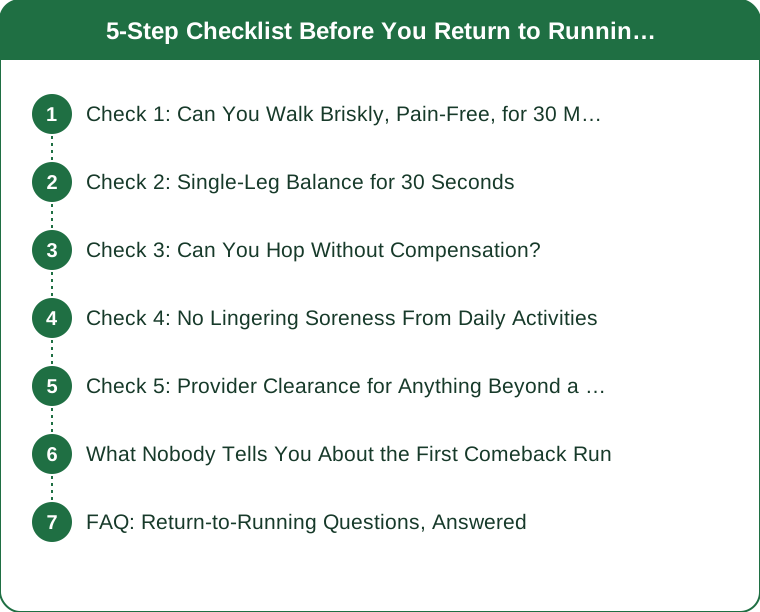
Check 1: Can You Walk Briskly, Pain-Free, for 30 Minutes?
Before running, you need to handle a brisk walk without pain or compensation — limping, favoring one side, or slowing down to manage discomfort all mean the tissue isn’t ready for running’s higher impact forces. This sounds basic, but it’s the checkpoint most commonly skipped by people eager to get back to their normal training.
Check 2: Single-Leg Balance for 30 Seconds
Standing on the previously injured leg for 30 seconds with eyes open, then closed, tests the stabilizing muscles and proprioception (your body’s sense of joint position) that running depends on heavily. A noticeable gap between your injured and uninjured side here is a strong signal you’re not ready yet, even if pain itself feels mostly gone.
Check 3: Can You Hop Without Compensation?
Single-leg hopping — even just 5-10 small hops in place — reveals compensations that walking never will, since running involves repeated single-leg impact your body needs to absorb correctly. If you’re noticeably avoiding full weight on the injured side during hops, or the movement looks different from your healthy leg, running will likely reveal the same issue at higher impact.

Check 4: No Lingering Soreness From Daily Activities
If stairs, standing for long periods, or a full day on your feet still leave the injured area sore by evening, your baseline tissue tolerance isn’t where it needs to be for running’s added demand. This checkpoint matters because running adds significant load on top of daily life — if daily life alone still causes soreness, running will very likely tip things over.
Check 5: Provider Clearance for Anything Beyond a Minor Strain
For sprains, tendon injuries, stress reactions, or anything that involved more than a few days of modified activity, get explicit clearance from a physical therapist or doctor before your first run, not just a general sense that it feels better. Self-assessment is useful for minor issues, but more serious injuries have return-to-run protocols that catch problems self-checks can miss.
What Nobody Tells You About the First Comeback Run
Your first run back should be shorter and slower than feels necessary — many comeback protocols suggest starting at 50% of your pre-injury easy-run distance, even if every checklist item above passed. The goal of the first run isn’t training benefit, it’s confirming the checklist held up under real running load, which only becomes clear 24-48 hours afterward.
FAQ: Return-to-Running Questions, Answered
How long should you wait between passing the checklist and your first run?
Most people benefit from 3-5 days of continuing to load the area with walking and hopping before the actual first run, to confirm the checklist result holds under repeated days, not just one good day.
What if pain returns during the first comeback run?
Stop immediately rather than pushing through — pain returning during a controlled first run is exactly the signal this checklist is designed to catch before it becomes a bigger setback.
Is soreness the day after the first run normal?
Mild, general muscle soreness is normal; soreness specifically at the injury site, or soreness that doesn’t improve within 48 hours, means you returned too soon or too fast.
TL;DR:
- Pass all five checks — brisk walking, single-leg balance, hopping, daily-life tolerance, and clearance for serious injuries — before your first run
- The first comeback run should be shorter and slower than feels necessary
- Pain returning during that first run means stop immediately, not push through
- Reinjury most often traces back to skipping one of these checkpoints, not bad luck
A checklist feels like it’s slowing you down, but it’s actually the fastest real path back — reinjury costs far more time than a few extra days of patience.
Keep Reading
This article is for general informational purposes only and is not medical advice. Always consult a qualified health professional for guidance specific to you.