5 Signs Your Injury Comeback Timeline Is Actually Realistic (Not Just Optimistic)
Quick Answer: A realistic comeback timeline typically shows gradual, symptom-free progression over several sessions rather than a single pain-free day, allows a buffer between reaching a milestone and pushing past it, and is guided by how the body responds rather than a fixed calendar date — these five signs distinguish a sound pace from a rushed one.
A single good day can feel like proof of full readiness. A truly realistic timeline is built on a pattern across multiple sessions, not one encouraging one.

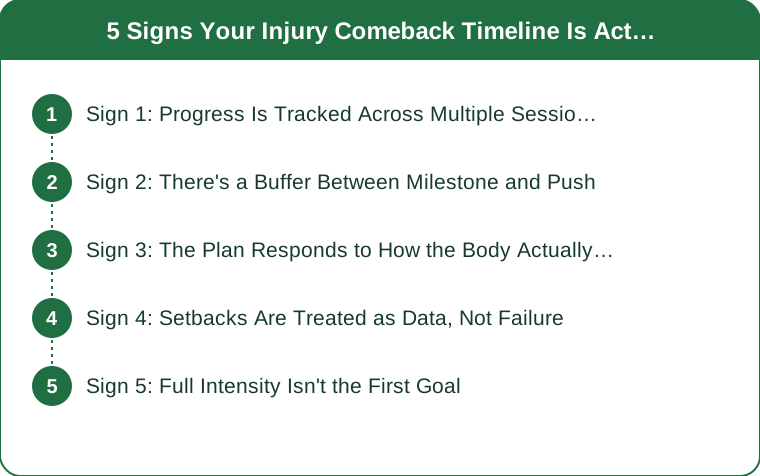
Sign 1: Progress Is Tracked Across Multiple Sessions, Not One
A single pain-free session is encouraging but not proof of readiness — a realistic timeline looks for the same result repeated across 2-3 consecutive sessions before advancing intensity, since one-off good days can be influenced by factors unrelated to actual healing.
Sign 2: There’s a Buffer Between Milestone and Push
Reaching a milestone (like pain-free walking) and immediately pushing to the next level (like light jogging) the same week often skips the buffer time needed to confirm the tissue has actually adapted, not just tolerated a single test.

Sign 3: The Plan Responds to How the Body Actually Reacts
A realistic comeback adjusts based on symptoms, not a fixed calendar — if week 3 doesn’t feel as ready as planned, a sound timeline pushes the schedule back rather than sticking to a predetermined date regardless of how the body is responding.
Sign 4: Setbacks Are Treated as Data, Not Failure
A minor flare-up that leads to calm reassessment and a temporary step back, rather than panic or stubbornly pushing through, is a sign of a realistic mindset — comebacks that treat every setback as catastrophic often either overreact by stopping entirely or underreact by ignoring the signal.
Sign 5: Full Intensity Isn’t the First Goal
A realistic timeline treats returning to full previous intensity as the final step, not an early target — building back functional movement and confidence at moderate intensity first, before chasing pre-injury numbers, tends to produce a more durable, lower-risk comeback.
TL;DR:
- A pattern across multiple sessions matters more than a single good day
- A buffer between reaching a milestone and pushing past it protects against overreach
- The plan should respond to actual symptoms, not stick rigidly to a calendar date
- Full previous intensity should be the final target, not an early milestone
A realistic comeback isn’t slower out of excessive caution — it’s paced by what the body is actually showing, session after session.
Keep Reading
This article is for general informational purposes only and is not medical advice. Always consult a qualified health professional for guidance specific to you.