5 Signs Your Comeback Timeline Is Actually Realistic (Not Just Optimistic)
Quick Answer: A realistic comeback timeline shows five consistent signs: pain-free range of motion holding steady between sessions, no swelling reappearing after activity, strength numbers climbing week over week (not stalling), sleep and energy staying normal, and confidence in the joint growing rather than shrinking — if two or more of these are missing, the timeline is probably too aggressive.
A calendar date doesn’t know how your tissue is actually healing. These five signs do.

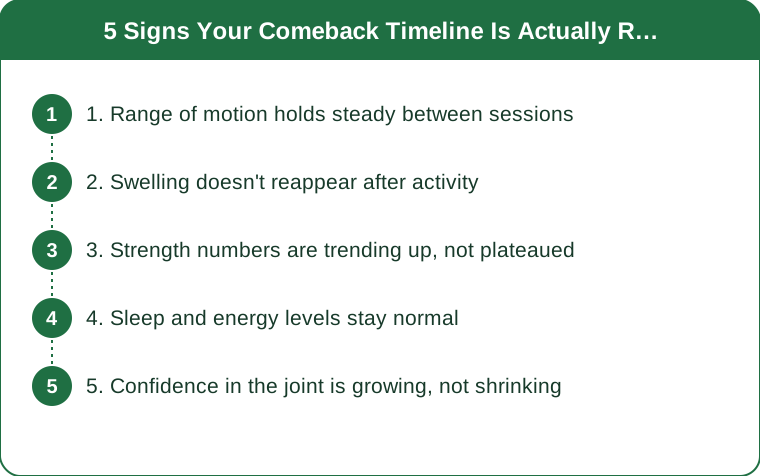
1. Range of motion holds steady between sessions
If your pain-free range of motion is the same (or better) at the start of each session compared to where it ended last time, that’s a strong sign of consistent healing. A range that regresses session to session — good on Monday, tight again on Wednesday — usually means the tissue hasn’t caught up to the loading you’re already doing, even if it feels fine in the moment.
2. Swelling doesn’t reappear after activity
Post-activity swelling that shows up hours later is one of the most reliable overload signals your body gives you, and it often appears well before pain does. A comeback pace where swelling has genuinely stopped returning after a full week of consistent activity is a good sign the tissue can handle the current load.

3. Strength numbers are trending up, not plateaued
Week-over-week strength gains, even small ones, indicate your nervous system and tissue are adapting to the load you’re putting through them. A strength plateau lasting more than two weeks at the same comeback stage is a sign the current progression is either too aggressive (causing a protective strength ceiling) or not aggressive enough to drive adaptation.
4. Sleep and energy levels stay normal
Disrupted sleep or unusual fatigue during a comeback phase is often an overlooked sign of systemic overload, since your body diverts recovery resources toward the injured area at the expense of normal recovery elsewhere. If sleep quality has been consistently normal through the comeback, that’s a quiet but meaningful vote of confidence from your nervous system.
5. Confidence in the joint is growing, not shrinking
A realistic timeline should feel like it’s building trust — each session slightly less guarded than the last. If you notice yourself flinching, hesitating, or mentally bracing more now than you did two weeks ago, that’s often your nervous system flagging something your conscious assessment is missing.
TL;DR:
- Steady or improving range of motion between sessions is a strong healing signal
- No returning swelling after activity means current load is well-tolerated
- Strength gains should trend up week over week, not plateau
- Normal sleep and growing (not shrinking) confidence round out the five signs
Two or more of these missing is your body’s way of saying the calendar is moving faster than the tissue.
Keep Reading
This article is for general informational purposes only and is not medical advice. Always consult a qualified health professional for guidance specific to you.